
Implications for Geography Education from Research on Climate Change Misinformation – A Systematic Review
Published 2026-06-07
Keywords
- climate change education,
- climate change misinformation,
- climate change disinformation,
- climate change denial,
- geography education
How to Cite
Copyright (c) 2026 Neli Heidari , Marvin Schlamelcher, Philipp Schmid

This work is licensed under a Creative Commons Attribution 4.0 International License.
Accepted 2026-05-31
Published 2026-06-07
Abstract
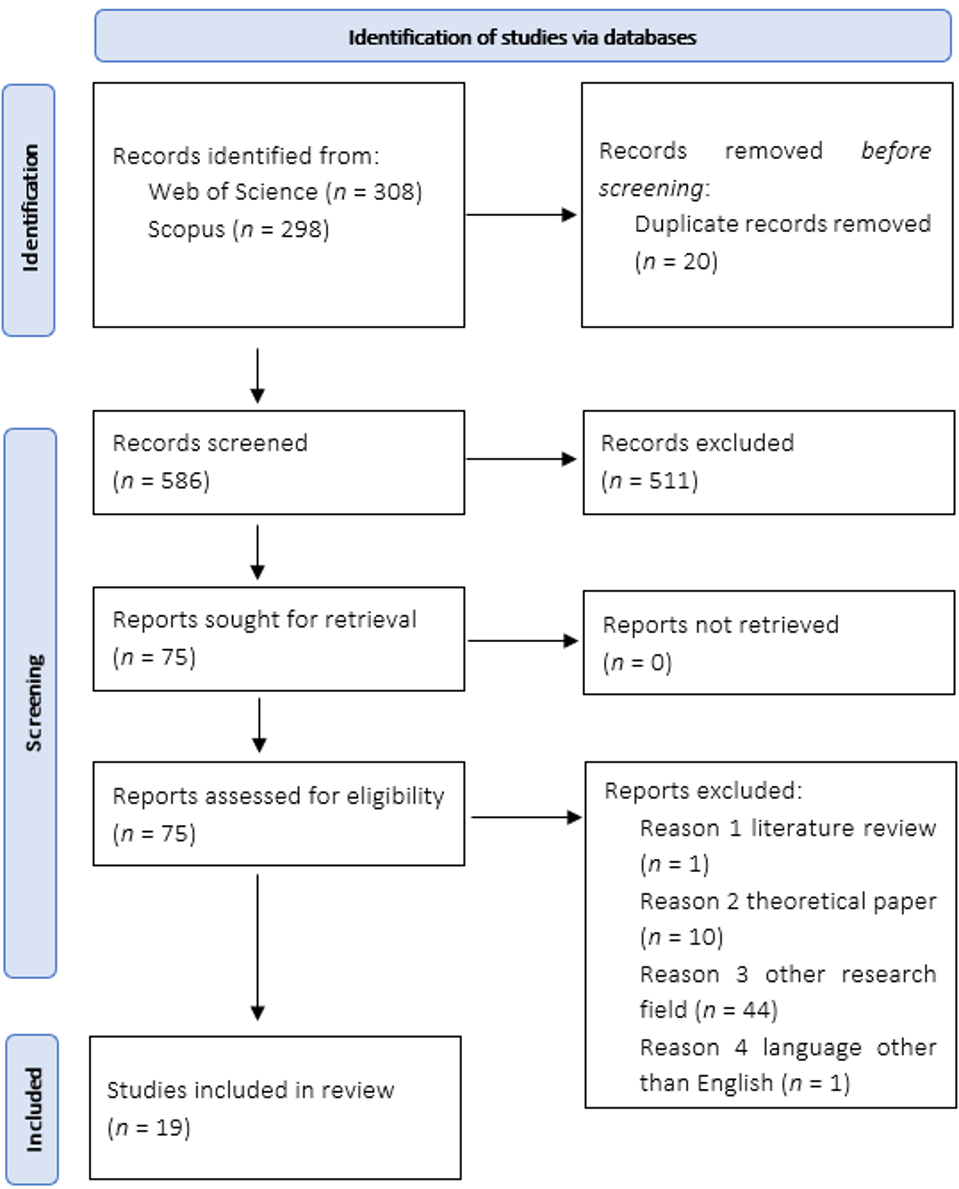
Climate change misinformation poses a significant challenge to public understanding of climate science and to education systems as it undermines trust in science and the scientific consensus on anthropogenic climate change. Geography education, positioned at the intersection of human-environment-relations and socio-scientific issues, plays a crucial role in addressing this challenge. However, there is a gap in geography education research regarding how to address climate change misinformation in geography education. Thus, the aim of this systematic literature review is to synthesize empirical research on climate change misinformation in educational contexts to derive implications, with particular relevance for geography education and its research. Following PRISMA guidelines, n = 17 peer-reviewed empirical studies were analyzed with respect to research settings, methodological approaches, meta-lenses, assessed learning outcomes (knowledge, strategies, and attitudes) and key findings. The results indicate a predominant focus in secondary education in Global North countries and on qualitative research approaches. Studies tend to prioritize strategy-based and attitudinal outcomes aimed at detecting misinformation, often in digital and social media contexts. In terms of meta-lenses, there is strong emphasis on Nature of Science. Intervention approaches on media literacy as well as inoculation and debunking are highly represented, whereas climate change education and AI-related misinformation remain underrepresented. Based on these findings, the review identifies key gaps in current research and derives implications for future geography education and its research in particular with respect to climate change education.
Highlights:
- Conceptualizes the determinants of climate change misinformation and identifies interventions that address these determinants in the context of climate change education for geography.
- Provides a systematic overview of peer-reviewed empirical studies on climate change misinformation in educational contexts.
- Derives implications for transforming climate change education in geography from the findings of the systematic literature review.
Contribution to the Special Issue Topics: The present study contributes to the special issue by systematically examining how geography education can respond to the epistemic challenges posed by climate change misinformation, exacerbated by marginalized gatekeeping and the rise of AI-generated content. Through a PRISMA-guided review of empirical research, the study identifies key trends, gaps, and implications for geography education, particularly regarding the potential of climate change education to foster resilience against respective misinformation. Thus, the study advances the special issue’s mission to strengthen the societal relevance and transformative potential of geography education
Downloads




References
- Abed, F., & Barzilai, S. (2023). Can students evaluate scientific YouTube videos? Examining students’ strategies and criteria for evaluating videos versus webpages on climate change. Journal of Computer Assisted Learning, 39(2), 558–577. https://doi.org/10.1111/jcal.12762
- Allchin, D. (2011). Evaluating knowledge of the nature of (whole) science. Science Education, 95(3), 518–542. https://doi.org/10.1002/sce.20432
- Allchin, D. (2023). Ten competencies for the science misinformation crisis. Science Education, 107(2), 261–274. https://doi.org/10.1002/sce.21746
- Anderson, E. (2011). Democracy, public policy, and lay assessments of scientific testimony. Episteme, 8(2), 144–164. https://doi.org/10.3366/epi.2011.0013
- Arnot, G., Pitt, H., McCarthy, S., Warner, E., & Thomas, S. (2024). ‘You can’t really separate these risks, our environment, our animals and us’: Australian children’s perceptions of the risks of the climate crisis. Health Promotion International, 39(2), daae023. https://doi.org/10.1093/heapro/daae023
- Baker, R. S., & Hawn, A. (2022). Algorithmic bias in education. International Journal of Artificial Intelligence in Education, 32(4), 1052–1092. https://doi.org/10.1007/s40593-021-00285-9
- Bernsteiner, A., Schubatzky, T., & Haagen-Schützenhöfer, C. (2023). Misinformation as a societal problem in times of crisis: A mixed-methods study with future teachers to promote a critical attitude towards information. Sustainability, 15(10), 8161. https://doi.org/10.3390/su15108161
- Brennan, R. L., & Prediger, D. J. (1981). Coefficient kappa: Some uses, misuses, and alternatives. Educational and Psychological Measurement, 41(3), 687–699. https://doi.org/10.1177/001316448104100307
- Brodsky, J. E., Brooks, P. J., Scimeca, D., Todorova, R., Galati, P., Batson, M., Grosso, R., Matthews, M., Miller, V., & Caulfield, M. (2021). Improving college students’ fact-checking strategies through lateral reading instruction in a general education civics course. Cognitive Research: Principles and Implications, 6(1), 23. https://doi.org/10.1186/s41235-021-00291-4
- Bromme, R., & Thomm, E. (2016). Knowing who knows: Laypersons’ capabilities to judge experts’ pertinence for science topics. Cognitive Science, 40(1), 241–252. https://doi.org/10.1111/cogs.12252
- Bueno-Picazo, M., & Tirado-Olivares, S. (2026). Generative AI in geography education: Content creation and conversational AI-supported learning to promote environmental awareness. European Journal of Geography, 17(2), 34–48. https://doi.org/10.48088/ejg.m.bue.17.2.034.048
- Chang, C.-H. (2023). Climate change education: Knowing, doing and being. Routledge.
- Chang, C.-H. (2024). Learning to know, do, be and live together for climate change education: A reflection on practices that work in the context of geographical education. J-READING Journal of Research and Didactics in Geography, 13(1), 71–82. http://www.j-reading.org/index.php/geography/article/view/399
- Chang, C.-H., & Pascua, L. (2016). Singapore students’ misconceptions of climate change. International Research in Geographical and Environmental Education, 25(1), 84–96. https://doi.org/10.1080/10382046.2015.1106206
- Chesney, R., & Citron, D. (2019). Deep fakes: A looming challenge for privacy, democracy, and national security. California Law Review, 107(6), 1753–1820. https://doi.org/10.15779/Z38RV0D15J
- Cook, J. (2016). Countering climate science denial and communicating scientific consensus. Oxford University Press.
- Cook, J., Ecker, U. K. H., Trecek-King, M., Schade, G., Jeffers-Tracy, K., Fessmann, J., Kim, S. C., Kinkead, D., Orr, M., Vraga, E., Roberts, K., & McDowell, J. (2023). The cranky uncle game—Combining humor and gamification to build student resilience against climate misinformation. Environmental Education Research, 29(4), 607–623. https://doi.org/10.1080/13504622.2022.2085671
- Cresswell, T. (2013). Geographic thought: A critical introduction. Wiley-Blackwell.
- Damico, J. S., & Baildon, M. C. (2022). How to confront climate denial: Literacy, social studies, and climate change. Teachers College Press.
- de Miguel González, R. (2024). Powerful geography and the future of geographic education. Dialogues in Human Geography, 14(1), 5–8. https://doi.org/10.1177/20438206241229219
- Diethelm, P., & McKee, M. (2009). Denialism: What is it and how should scientists respond? European Journal of Public Health, 19(1), 2–4. https://doi.org/10.1093/eurpub/ckn139
- Doss, C., Mondschein, J., Shu, D., Wolfson, T., Kopecky, D., Fitton-Kane, V. A., Bush, L., & Tucker, C. (2023). Deepfakes and scientific knowledge dissemination. Scientific Reports, 13, 13429. https://doi.org/10.1038/s41598-023-39944-3
- European Parliament. (2025). Flash Eurobarometer FL014EP: Social media survey 2025 (v1.00) [Data set]. http://data.europa.eu/88u/dataset/s3592_fl014ep_eng
- Fearnley, F. (2020). Social media as a tool for geographers and geography educators. In N. Walshe, & G. Healy (Eds.), Geography education in the digital world: Linking theory and practice (pp. 75–86). Routledge. https://doi.org/10.4324/9780429274909-8
- Gold, A. U., Oonk, D. J., Smith, L., Boykoff, M. T., Osnes, B., & Sullivan, S. B. (2015). Lens on climate change: Making climate meaningful through student-produced videos. Journal of Geography, 114(6), 235–246. https://doi.org/10.1080/00221341.2015.1013974
- Guenther, L., Ibrahim, Y., Lüdemann, J., O’Brian, C. I., Pavenstädt, C. N., Sievert, I. J., Brüggemann, M., Rödder, S., & Schnegg, M. (2024). Social constructions of climate futures: Reframing science’s harmful impact frame across news media, social movements, and local communities. Environmental Communication, 18(3), 322–338. https://doi.org/10.1080/17524032.2024.2305827
- He, Y., Tani, S., & Puustinen, M. (2024). GeoCapabilities approach to climate change education: Developing an epistemic model for geographical thinking. Journal of Geography, 123(2–3), 23–31. https://doi.org/10.1080/00221341.2024.2334946
- Henderson, J. A., Drewes, A., Trauth, A. E., Thayer, N., & Hemsley, K. (2025). How geography and politics shape teachers’ engagement with climate change science standards. Environmental Education Research, 31(12), 2507–2530. https://doi.org/10.1080/13504622.2024.2441198
- Hendriks, F., Kienhues, D., & Bromme, R. (2015). Measuring laypeople’s trust in experts in a digital age: The Muenster Epistemic Trustworthiness Inventory (METI). PLOS ONE, 10(10), e0139309. https://doi.org/10.1371/journal.pone.0139309
- Hong, Q. N., Fàbregues, S., Bartlett, G., Boardman, F., Cargo, M., Dagenais, P., Gagnon, M.-P., Griffiths, F., Nicolau, B., O’Cathain, A., Rousseau, M.-C., Vedel, I., & Pluye, P. (2018). The Mixed Methods Appraisal Tool (MMAT) version 2018 for information professionals and researchers. Education for Information, 34(4), 285–291. https://doi.org/10.3233/EFI-180221
- Hopkins, K. L., Lepage, C., Cook, W., Thomson, A., Abeyesekera, S., Knobler, S., Boehman, N., Thompson, B., Waiswa, P., Ssanyu, J. N., Kabwijamu, L., Wamalwa, B., Aura, C., Rukundo, J. C., & Cook, J. (2023). Co-designing a mobile-based game to improve misinformation resistance and vaccine knowledge in Uganda, Kenya, and Rwanda. Journal of Health Communication, 28(Suppl. 2), 49–60. https://doi.org/10.1080/10810730.2023.2231377
- Keener, R. (2020). University students’ media informational reasoning process and its intersection with their social identities. In L. Gómez Chova, A. López Martínez, & I. Candel Torres (Eds.), INTED2020 Proceedings (pp. 2949–2957). IATED Academy. https://doi.org/10.21125/inted.2020.0877
- Kops, M., Schittenhelm, C., & Wachs, S. (2025). Young people and false information: A scoping review of responses, influential factors, consequences, and prevention programs. Computers in Human Behavior, 169, 108650. https://doi.org/10.1016/j.chb.2025.108650
- Kozyreva, A., Lorenz-Spreen, P., Herzog, S. M., Ecker, U. K. H., Lewandowsky, S., Hertwig, R., Ali, A., Bak-Coleman, J., Barzilai, S., Basol, M., Berinsky, A. J., Betsch, C., Cook, J., Fazio, L. K., Geers, M., Guess, A. M., Huang, H., Larreguy, H., Maertens, R., ... Wineburg, S. (2024). Toolbox of individual-level interventions against online misinformation. Nature Human Behaviour, 8(6), 1044–1052. https://doi.org/10.1038/s41562-024-01881-0
- Kresin, S., Kremer, K., & Büssing, A. G. (2024). Students’ credibility criteria for evaluating scientific information: The case of climate change on social media. Science Education, 108(3), 762–791. https://doi.org/10.1002/sce.21855
- Kresin, S., Kremer, K., Nehring, A., & Büssing, A. G. (2025). Students’ awareness and conceptions of science-related communication mechanisms on social media. Journal of Research in Science Teaching, 62(3), 756–791. https://doi.org/10.1002/tea.21973
- Labadze, L., Grigolia, M., & Machaidze, L. (2023). Role of AI chatbots in education: Systematic literature review. International Journal of Educational Technology in Higher Education, 20, 56. https://doi.org/10.1186/s41239-023-00426-1
- Lambert, D., & León, K. (2026). Geography teaching, racial literacy and truthfulness. European Journal of Geography, 17(2), 49–64. https://doi.org/10.48088/ejg.d.lam.17.2.049.064
- Lambert, D., Solem, M., & Tani, S. (2015). Achieving human potential through geography education: A capabilities approach to curriculum making in schools. Annals of the Association of American Geographers, 105(4), 723–735. https://doi.org/10.1080/00045608.2015.1022128
- Lämmer, S., & Ohl, U. (2024). Facts and fakes – A systematic literature review on how primary school students deal with fake news from the perspective of geography education. International Research in Geographical and Environmental Education, 1–19. https://doi.org/10.1080/10382046.2024.2438061
- Lämmer, S., & Ohl, U. (2026). Evaluating climate change fake news in German primary education: The role of students’ conceptions. European Journal of Geography, 17(2), 16–33. https://doi.org/10.48088/ejg.s.lam.17.2.016.033
- Lane, R. (2025). Mitigating risks, embracing potential: A framework for integrating generative artificial intelligence in geographical and environmental education. International Research in Geographical and Environmental Education, 1–18. https://doi.org/10.1080/10382046.2025.2458561
- Lathrop, B. N. (2025). Confronting the post-truth phenomenon in literacy education: The need for a critical media epistemology. Journal of Adolescent & Adult Literacy, 68(6), 665–678. https://doi.org/10.1002/jaal.1407
- Lederman, J., Bartels, S., Lederman, N., & Gnanakkan, D. (2014). Demystifying nature of science: Two activities help young children understand nature of science. Science and Children, 52(1), 40–45. https://doi.org/10.2505/4/SC14_052_01_40
- Lee, J., Cimová, T., Foster, E. J., France, D., Krajňáková, L., Moorman, L., Rewhorn, S., & Zhang, J. (2025). Transforming geography education: The role of generative AI in curriculum, pedagogy, assessment, and fieldwork. International Research in Geographical and Environmental Education, 34(3), 237–253. https://doi.org/10.1080/10382046.2025.2459780
- Levy, S. R., Monahan, C., Araiza, A., Ramírez, L., & Palacios-Espinosa, X. (2025). Reducing climate change denial and increasing support for climate-friendly policies: The role of climate change education. Journal of Social Issues, 81(1), e12664. https://doi.org/10.1111/josi.12664
- Lewandowsky, S. (2021). Climate change disinformation and how to combat it. Annual Review of Public Health, 42, 1–21. https://doi.org/10.1146/annurev-publhealth-090419-102409
- Lewandowsky, S., Ecker, U. K. H., Cook, J., van der Linden, S., Roozenbeek, J., Oreskes, N., & McIntyre, L. C. (2024). Liars know they are lying: Differentiating disinformation from disagreement. Humanities and Social Sciences Communications, 11, 986. https://doi.org/10.1057/s41599-024-03503-6
- Li, C. J., & Monroe, M. C. (2019). Exploring the essential psychological factors in fostering hope concerning climate change. Environmental Education Research, 25(6), 936–954. https://doi.org/10.1080/13504622.2017.1367916
- McGrew, S. (2020). Learning to evaluate: An intervention in civic online reasoning. Computers & Education, 145, 103711. https://doi.org/10.1016/j.compedu.2019.103711
- Meadows, M. E. (2020). Geography education for sustainable development. Geography and Sustainability, 1(1), 88–92. https://doi.org/10.1016/j.geosus.2020.02.001
- Mitchell, D., Hanus, M., Béneker, T., Biddulph, M., Leininger-Frézal, C., Zwartjes, L., & Donert, K. (2022). Enhancing teachers’ expertise through curriculum leadership—Lessons from the GeoCapabilities 3 project. Journal of Geography, 121(5–6), 162–172. https://doi.org/10.1080/00221341.2022.2149838
- Monroe, M. C., Plate, R. R., Oxarart, A., Bowers, A., & Chaves, W. A. (2019). Identifying effective climate change education strategies: A systematic review of the research. Environmental Education Research, 25(6), 791–812. https://doi.org/10.1080/13504622.2017.1360842
- Nygren, T., & Guath, M. (2022). Students evaluating and corroborating digital news. Scandinavian Journal of Educational Research, 66(4), 549–565. https://doi.org/10.1080/00313831.2021.1897876
- OECD. (2025). Empowering learners for the age of AI: An AI literacy framework for primary and secondary education (Review draft). OECD Publishing. https://ailiteracyframework.org
- O’Mahony, C., Brassil, M., Murphy, G., & Linehan, C. (2023). The efficacy of interventions in reducing belief in conspiracy theories: A systematic review. PLOS ONE, 18(4), e0280902. https://doi.org/10.1371/journal.pone.0280902
- Onuoha, J., Eze, E., Ezeaputa, C. M.-C., Okpabi, J. U., & Onyia, J. C. (2021). Does learning geography increase climate change awareness? A comparison of school subjects’ influence on climate change awareness. Journal of Geography, 120(4), 140–151. https://doi.org/10.1080/00221341.2021.1949027
- Osborne, J., & Pimentel, D. (2023). Science education in an age of misinformation. Science Education, 107(3), 553–571. https://doi.org/10.1002/sce.21790
- Page, M. J., McKenzie, J. E., Bossuyt, P. M., Boutron, I., Hoffmann, T. C., Mulrow, C. D., Shamseer, L., Tetzlaff, J. M., Akl, E. A., Brennan, S. E., Chou, R., Glanville, J., Grimshaw, J. M., Hróbjartsson, A., Lalu, M. M., Li, T., Loder, E. W., Mayo-Wilson, E., McDonald, S., Moher, D. (2021). The PRISMA 2020 statement: An updated guideline for reporting systematic reviews. International Journal of Surgery, 88, 105906. https://doi.org/10.1016/j.ijsu.2021.105906
- Pearson, S., Hornsey, M. J., Bretter, C., MacInnes, S., Nylund, J. L., Rekker, S., Smith, A. E., & Wade, B. (2026). Evaluating generative AI’s potential to dispel misinformation about wind farms. Scientific Reports, 16, 13424. https://doi.org/10.1038/s41598-026-42790-8
- Pennycook, G., Bear, A., Collins, E. T., & Rand, D. G. (2020). The implied truth effect: Attaching warnings to a subset of fake news headlines increases perceived accuracy of headlines without warnings. Management Science, 66(11), 4944–4957. https://doi.org/10.1287/mnsc.2019.3478
- Perkins, K. M., Munguia, N., Moure-Eraso, R., Delakowitz, B., Giannetti, B. F., Liu, G., Nurunnabi, M., Will, M., & Velazquez, L. (2018). International perspectives on the pedagogy of climate change. Journal of Cleaner Production, 200, 1043–1052. https://doi.org/10.1016/j.jclepro.2018.07.296
- Poor, S. V., Herman, B. C., & Janney, B. A. (2025). How scientists perceive NOS and its value for science communication. Science & Education, 34, 3827–3858. https://doi.org/10.1007/s11191-024-00592-2
- Potter, W. J. (2010). The state of media literacy. Journal of Broadcasting & Electronic Media, 54(4), 675–696. https://doi.org/10.1080/08838151.2011.521462
- Puttick, S. (2025). Geographical education III: Changing climate, changing geographies, changing geographical education? Progress in Human Geography, 49(2), 227–235. https://doi.org/10.1177/03091325241313467
- Puttick, S., & Talks, I. (2022). Teachers' sources of information about climate change: A scoping review. The Curriculum Journal, 33(3), 378–395. https://doi.org/10.1002/curj.136
- Ranney, M. A., & Velautham, L. (2021). Climate change cognition and education: Given no silver bullet for denial, diverse information-hunks increase global warming acceptance. Current Opinion in Behavioral Sciences, 42, 139–146. https://doi.org/10.1016/j.cobeha.2021.08.001
- Rawling, E. (2022). A framework for the school geography curriculum. The Geographical Association. https://geography.org.uk/wp-content/uploads/2023/07/GA-Curriculum-Framework-2022-WEB-final.pdf
- Reinfried, S., Aeschbacher, U., & Rottermann, B. (2012). Improving students’ conceptual understanding of the greenhouse effect using theory-based learning materials that promote deep learning. International Research in Geographical and Environmental Education, 21(2), 155–178. https://doi.org/10.1080/10382046.2012.672685
- Reinfried, S., & Tempelmann, S. (2014). The impact of secondary school students’ preconceptions on the evolution of their mental models of the greenhouse effect and global warming. International Journal of Science Education, 36(2), 304–333. https://doi.org/10.1080/09500693.2013.773598
- Remshard, M., Kyrychenko, Y., van der Linden, S., Goldberg, M. H., Leiserowitz, A., Savoia, E., & Roozenbeek, J. (2026). Addressing climate action misperceptions with generative AI. arXiv. https://arxiv.org/abs/2602.22564
- Roberts, M. (2020). Geographical sources in the digital world: Disinformation, representation and reliability. In N. Walshe, & G. Healy (Eds.), Geography education in the digital world: Linking theory and practice (pp. 53–64). Routledge. https://doi.org/10.4324/9780429274909-6
- Rushton, E. A. C., Dunlop, L., & Atkinson, L. (2025). Fostering teacher agency in school-based climate change education in England, UK. The Curriculum Journal, 36(1), 36–51. https://doi.org/10.1002/curj.253
- Saribas, D., & Çetinkaya, E. (2025). Exploring pre-service teachers’ reasoning levels on pseudoscientific and scientific texts. Science & Education, 34(5), 3589–3613. https://doi.org/10.1007/s11191-024-00583-3
- Schlamelcher, M. S., Heidari, N., & Schmid, P. (2025). Klimawandelleugnung in der geographischen Bildung begegnen: Konzepte, Strategien und Professionalisierungsansätze. In D. Pijetlovic, J. von Au, & Virtuelle Akademie Nachhaltigkeit (VAN) (Eds.), Klimawandel und Bildung: Konzepte, Methoden und Perspektiven transformativer Klimabildung (pp. 271–297). oekom.
- Schmid, P. (2023). Using behavioral science for infodemic preparedness: The case of vaccination misinformation. Policy Insights from the Behavioral and Brain Sciences, 11(1), 93–101. https://doi.org/10.1177/23727322231219684
- Schmid, P., & Betsch, C. (2019). Effective strategies for rebutting science denialism in public discussions. Nature Human Behaviour, 3(9), 931–939. https://doi.org/10.1038/s41562-019-0632-4
- Schmid, P., MacDonald, N. E., Habersaat, K., & Butler, R. (2018). Commentary to: How to respond to vocal vaccine deniers in public. Vaccine, 36(2), 196–198. https://doi.org/10.1016/j.vaccine.2016.09.065
- Schubatzky, T., & Haagen-Schützenhöfer, C. (2022). Debunking climate myths is easy—Is it really? An explorative case study with pre-service physics teachers. Education Sciences, 12(8), 566. https://doi.org/10.3390/educsci12080566
- Siani, A., Joseph, M., & Dacin, C. (2024). Susceptibility to scientific misinformation and perception of news source reliability in secondary school students. Discover Education, 3, 93. https://doi.org/10.1007/s44217-024-00194-8
- Tabor, L., & Harrington, J. (2023). Teaching about local climates, global climate, and climatic change. Journal of Geography, 122(6), 155–162. https://doi.org/10.1080/00221341.2023.2284390
- Treen, K. M. d'I., Williams, H. T. P., & O’Neill, S. J. (2020). Online misinformation about climate change. WIREs Climate Change, 11(5), e665. https://doi.org/10.1002/wcc.665
- Vaccari, C., & Chadwick, A. (2020). Deepfakes and disinformation: Exploring the impact of synthetic political video on deception, uncertainty, and trust in news. Social Media + Society, 6(1), 2056305120903408. https://doi.org/10.1177/2056305120903408
- Xiao, Y., & Watson, M. (2019). Guidance on conducting a systematic literature review. Journal of Planning Education and Research, 39(1), 93–112. https://doi.org/10.1177/0739456X17723971